Introduction
Deploying network equipment in remote outdoor environments has always been challenging due to the lack of reliable power infrastructure.
Traditional surveillance systems installed in highways, farms, forests, construction sites, mining areas, reservoirs, and border security locations often require expensive grid power installation or frequent maintenance of standalone power systems.
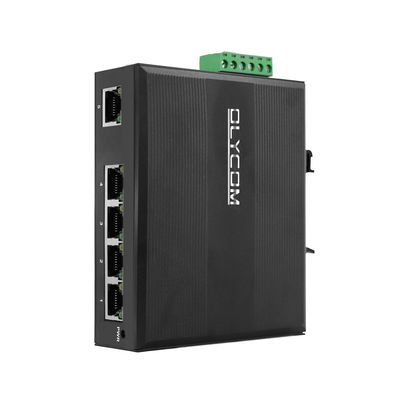
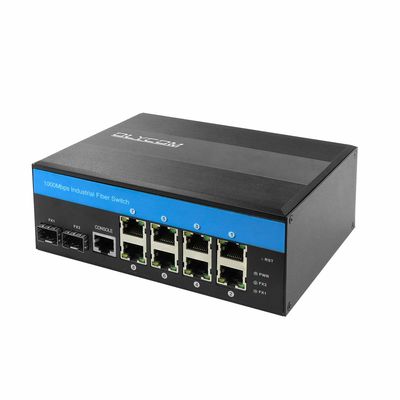
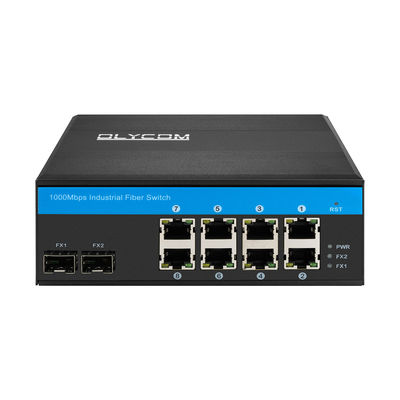
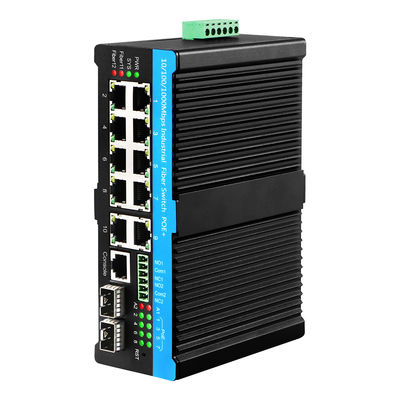
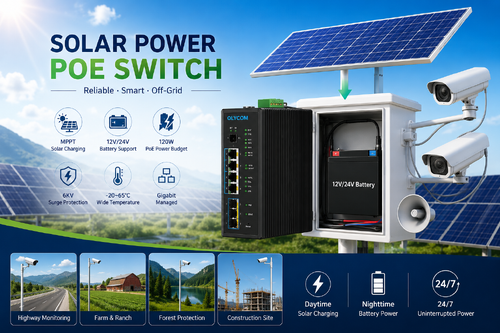
To address these challenges, OLYCOM developed the IM-FP244S-GM Managed Industrial Solar PoE Switch, an integrated networking solution that combines a Gigabit managed PoE switch, an MPPT solar charge controller, and battery management into one compact industrial device.
The switch enables IP cameras, wireless bridges, access points, and other PoE-powered devices to operate continuously using solar energy, making it ideal for off-grid deployments. The built-in MPPT charging controller supports direct connection to photovoltaic panels and battery systems, providing reliable 24/7 operation while reducing dependence on conventional power infrastructure.

This case study demonstrates how a solar-powered surveillance system can provide uninterrupted network connectivity throughout both daytime and nighttime operation.
Customer Challenge
A customer planned to deploy several outdoor IP cameras and an alarm speaker in a remote monitoring location where commercial AC power was unavailable.
The project required:
- Continuous 24/7 operation
- Power supplied entirely by solar energy
- Stable Gigabit network connectivity
- Remote device management
- Support for multiple PoE devices
- Reliable operation under harsh outdoor conditions
- Minimal maintenance after installation
Installing traditional power lines would significantly increase project costs and construction time.
The customer therefore required a complete off-grid surveillance networking solution powered entirely by renewable energy.
Solution Overview
The solution is built around the OLYCOM IM-FP244S-GM Managed DIN Solar PoE Switch.
Unlike conventional industrial switches that require an external solar controller, battery charger, and DC power system, this device integrates all essential power management functions into a single industrial platform.
The solution includes:
- Solar panel
- Managed Industrial Solar PoE Switch
- MPPT solar charging controller
- 12V or 24V battery system
- IP cameras
- Outdoor alarm speaker
- Fiber or Gigabit uplink to the monitoring center
The integrated design greatly simplifies deployment while improving overall system reliability.
System Working Principle
The solar power system automatically switches between charging mode and battery power according to environmental conditions.
Daytime Operation: Solar Charging
During daylight hours, the photovoltaic panel converts sunlight into electrical energy.
The integrated MPPT controller continuously tracks the maximum power point of the solar panel, optimizing charging efficiency and ensuring that the battery receives the highest possible charging current.
At the same time, the generated energy powers the connected PoE devices, including IP cameras, wireless bridges, access points, and alarm speakers.
Any excess energy is stored in the battery for nighttime operation.
This intelligent energy management allows the surveillance system to operate continuously without interrupting network communication.
Nighttime Operation: Battery Discharging
After sunset, the solar panel no longer generates electricity.
The system automatically switches to battery power without requiring manual intervention.
Stored battery energy continues supplying power to the industrial PoE switch, which maintains uninterrupted operation of all connected network devices.
Because the power transition is fully automatic, IP cameras remain online throughout the night, ensuring continuous video recording and remote monitoring.
This seamless switching mechanism guarantees true 24-hour surveillance even in completely off-grid environments.
Why MPPT Makes a Difference
One of the key technologies behind this solution is the integrated MPPT (Maximum Power Point Tracking) solar charging controller.
Compared with conventional PWM charging systems, MPPT continuously adjusts the operating voltage and current of the photovoltaic panel to extract the maximum available power under changing sunlight conditions.
This results in:
- Higher charging efficiency
- Faster battery charging
- Better performance during cloudy weather
- Improved battery lifespan
- More stable power supply for outdoor networking equipment
The controller provides charging efficiencies of up to 98%, supports solar panel input up to 1200W, and can work with both 12V and 24V photovoltaic systems. It also supports automatic battery voltage recognition, integrated battery protection, and multiple battery profiles.
| Battery Type |
Lead acid battery |
Lithium battery |
Lithium iron phosphate battery |
| Battery voltag |
12V |
24V |
12.6V |
25.2V |
14.8V |
29.6V |
| Charging mode |
MPPT(current and voltage limiting - constant current - voltage limiting - Pressure and current limiting --- floating charge) |
MPPT (current and voltage limiting constant current constant voltage) |
| Auxiliary Charging Function |
Support |
| Battery Voltage Detection Threshold |
<12.6V |
<24.8V |
<12.2V |
<24.4V |
<14.2V |
<28.8V |
| Rated charging current |
15A |
| Float current |
50mA-1000mA |
— |
| Float time |
3 hours |
— |
| Charging stop |
Arrival float timing |
Rated voltage and simultaneous charging current < 30mA |
| Rated discharge current |
6.5A |
3.6A |
8.5A |
4A |
6.5A |
4A |
| PoE output voltage |
42~57V |
| PoE output power |
Maximum 120W |
| Photovoltaic open circuit voltage |
32V |
45V |
32V |
45V |
32V |
45V |
| Photovoltaic input |
Max 57V,Max 1200W |
| Maximum charging voltage |
14.7V |
29.6V |
12.6V |
25.2V |
14.8V |
29.6V |
| Floating charge voltage |
13.7V |
27.4V |
— |
— |
— |
— |
| Discharge cut-off voltagE |
10.1V |
20.2V |
9V |
18V |
10.2V |
20.4V |
| Type |
Default 6 battery type specifications (12V battery pack * 3, 24V battery pack * 3) Customizable battery parameters
Supports up to 500AH
|
| Over temperature protection |
Supports automatic shutdown of motherboard over temperature and battery over temperature (optional) |
| Input protection |
Overcurrent, overvoltage, delayed start and anti connection protection |
| Output function |
Overcurrent, overvoltage and short circuit |
| Indicator light |
System normal operation indicator, battery lamp, input normal indicator, charge discharge indicator and multi-functional composite fault indicator |
Hardware Configuration
The IM-FP244S-GM combines networking and power management into one industrial platform.
Key features include:
- 4 × Gigabit PoE Ethernet ports
- 2 × Gigabit SFP fiber uplink ports
- IEEE 802.3af/at/bt PoE support
- Maximum 90W output on Port 1
- Total PoE budget of 120W
- Integrated MPPT solar charging controller
- Support for lead-acid and lithium batteries
- Battery capacity up to 500Ah
- Managed Layer 2 switching functions
- PoE Watchdog for automatic device recovery
- 6KV surge protection
- Industrial operating temperature from -20°C to +65°C.
Because networking and solar charging are integrated into one device, installers need fewer components, reducing wiring complexity and improving long-term reliability.
Application Scenarios
The Solar PoE Switch is suitable for a wide range of outdoor networking projects, including:
- Solar-powered CCTV surveillance
- Highway monitoring systems
- Smart transportation
- Forest fire prevention
- Border security
- Oil and gas pipelines
- Solar farms
- Agricultural monitoring
- Fishery monitoring
- Reservoir and dam security
- Construction sites
- Mining operations
- Wireless bridge installations
- Smart city infrastructure
- Environmental monitoring stations
Wherever commercial electricity is unavailable or difficult to install, a solar-powered networking system provides an efficient alternative.
Benefits of the Solution
Compared with conventional outdoor networking solutions, this integrated solar-powered architecture offers several significant advantages.
First, it eliminates the need for external AC power, making deployment possible in completely remote locations.
Second, integrating the MPPT controller, battery management, and industrial PoE switch into one device reduces installation complexity and lowers maintenance costs.
Third, intelligent battery management protects the energy storage system while maximizing battery life.
Fourth, managed networking features enable remote monitoring, VLAN configuration, traffic management, and automatic recovery of connected PoE devices through the built-in PoE Watchdog function.
Finally, the system provides continuous 24/7 operation by automatically switching between solar charging during the day and battery discharge at night, ensuring uninterrupted power for surveillance equipment.
Conclusion
This project demonstrates how the OLYCOM IM-FP244S-GM Managed Industrial Solar PoE Switch delivers a complete solar-powered outdoor networking solution for remote surveillance applications.
By integrating a Gigabit managed PoE switch, MPPT solar charge controller, and battery management system into a single industrial device, the solution enables reliable off-grid operation for IP cameras, wireless bridges, LED lighting, and other PoE-powered equipment.
The automatic transition between daytime solar charging and nighttime battery discharge ensures uninterrupted 24/7 operation, while intelligent battery management and high-efficiency MPPT technology maximize energy utilization and reduce maintenance requirements.
For organizations planning solar-powered CCTV systems, off-grid IP camera installations, or remote industrial networking projects, this solution provides a reliable, scalable, and energy-efficient platform that combines networking, power management, and renewable energy into one integrated system.


 Your message must be between 20-3,000 characters!