The Solution: Independent TTL Fiber Link + Gigabit Ethernet Fiber Link

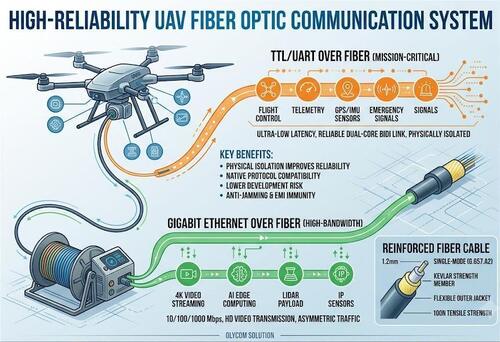
A common architecture in industrial and tethered drones is using two independent fiber optic communication channels:
Channel 1 – TTL over Fiber
Dedicated to critical command and telemetry data:
- Flight control commands
- GPS position information
- IMU attitude data
- Battery and system health monitoring
- Emergency control signals
This communication is highly interactive:
Ground Station → UAV
Control commands and mission updates
UAV → Ground Station
Real-time telemetry and status feedback
Because flight safety depends on stable communication, the TTL link is physically isolated from high-bandwidth traffic.
Channel 2 – Gigabit Ethernet over Fiber
Designed for large data transmission, including:
- 1080P / 4K HD video streaming
- Thermal imaging cameras
- AI vision processing systems
- LiDAR point cloud data
- IP-based sensors
Although Ethernet is technically full-duplex, most UAV applications have a highly asymmetric traffic pattern:
UAV → Ground Station
Massive video and sensor data stream
Ground Station → UAV
Only small configuration packets or acknowledgments
A Gigabit fiber Ethernet module provides sufficient bandwidth for common H.264 and H.265 encoded video transmission.
Why Not Put TTL and Ethernet on One Fiber?
While protocol conversion such as UART-to-IP is possible, many professional UAV systems still prefer independent communication links.
Reasons include:
1. Physical Isolation Improves Reliability
If video traffic suddenly increases or the Ethernet system experiences a failure, the flight control channel remains unaffected.
Even when the video link fails:
- Flight controller remains online
- Telemetry remains available
- Return-to-home commands can still be executed
For mission-critical UAV systems, reliability always has higher priority than reducing cable count.
2. Native Protocol Compatibility
Many UAV components are still based on native serial communication:
- MAVLink flight controllers
- GPS modules
- IMU sensors
- Gimbal controllers
- Legacy industrial devices
Direct UART/TTL over fiber provides a simple, low-latency, and software-independent solution.
3. Lower Development Risk
Converting serial communication into Ethernet requires additional processors, software stacks, and network management.
This introduces:
- Additional latency
- Software complexity
- Operating system dependency
- Potential system failure points
For industrial and defense UAVs, simplicity often means higher reliability.
Fiber Cable Selection for UAV Applications
Unlike standard fiber patch cords, UAV applications require specially designed reinforced fiber optic cables.
Typical specifications include:
- Single-mode fiber (G.657.A2)
- 2-core or 4-core structure
- 1.2 mm cable diameter
- 100 N tensile strength
- Kevlar reinforced structure
- High flexibility for winding systems
Inside the cable:
- Optical fibers for communication
- Kevlar strength member for tensile protection
- Flexible outer jacket
This design allows the cable to withstand continuous pulling, vibration, and rotation during UAV operation.
Typical Two-Core Fiber Architecture
A two-core single-mode fiber cable is one of the most common solutions.
Fiber Core 1:
- Gigabit Ethernet over fiber
- 1310/1550 nm BiDi optical modules
- Video, AI data, and IP communication
Fiber Core 2:
- TTL serial communication over fiber
- 1310/1550 nm BiDi optical modules
- Flight control, telemetry, and sensor data
Each fiber core operates as an independent full-duplex communication channel, ensuring complete isolation between control and payload transmission.
Future Trend: Towards All-IP UAV Networks
The UAV industry is gradually moving toward unified Ethernet-based architectures driven by:
- TSN (Time Sensitive Networking)
- ROS 2
- DDS middleware
- AI computing platforms
- Gigabit onboard networks
Future UAV systems may integrate:
- Video
- Telemetry
- Sensors
- CAN bus
- Flight control data
into a single deterministic IP network.
However, today many industrial, tethered, anti-jamming, and defense UAV platforms still rely on the dual-channel architecture:
TTL over Fiber + Ethernet over Fiber
because it provides the highest level of reliability.
OLYCOM Solution
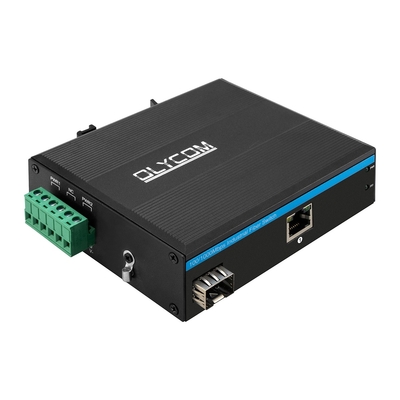
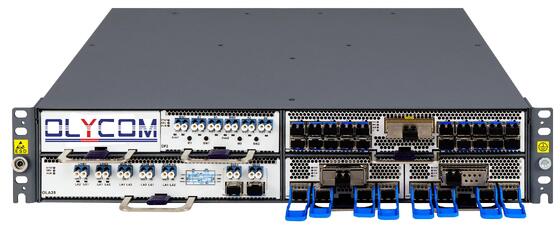
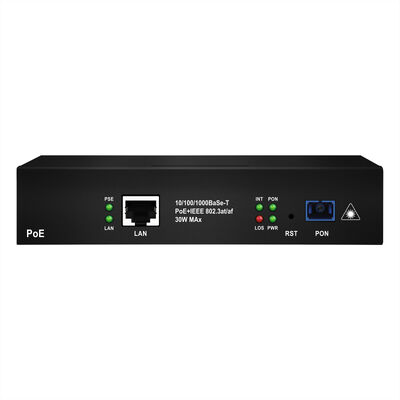
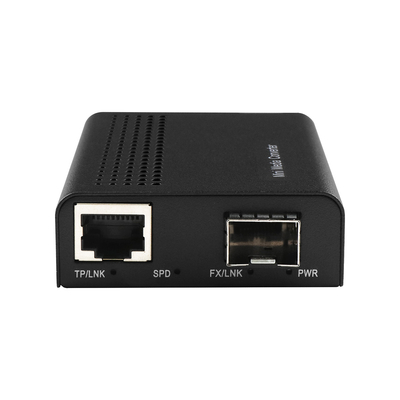
OLYCOM provides compact fiber optic communication modules suitable for UAV integration:
Model 1: OM610-1V1TWR
Model 2: TA510-GE-X card
- TTL Fiber Optic Module
- Transparent UART/TTL transmission
- Low latency communication
- Ideal for flight controllers, sensors, and telemetry systems
- Gigabit Ethernet Fiber Module
- 10/100/1000 Mbps Ethernet transmission
- Supports high-definition H.264/H.265 video streams
- Suitable for IP cameras, AI computers, and network payloads
Both modules can be used individually or combined in a dual-channel UAV communication architecture.
Conclusion
As UAV applications continue expanding from consumer drones into industrial inspection, security, and defense markets, fiber optic communication is becoming a key technology for achieving long-distance, anti-interference, and high-reliability transmission.
The combination of TTL over Fiber for mission-critical control and Gigabit Ethernet over Fiber for high-bandwidth payloads remains a mature and widely adopted architecture for professional UAV systems.


 Your message must be between 20-3,000 characters!