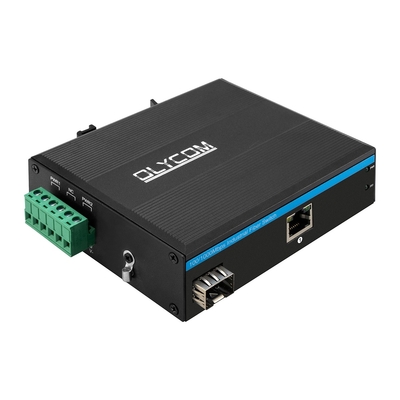
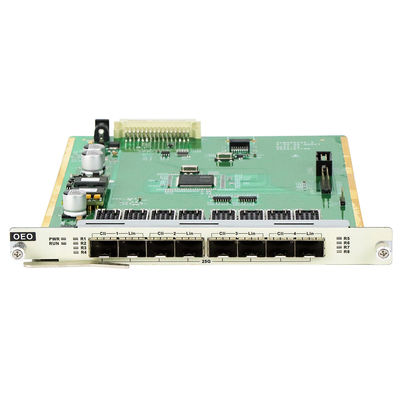
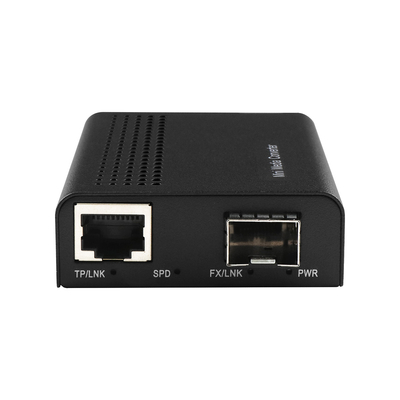
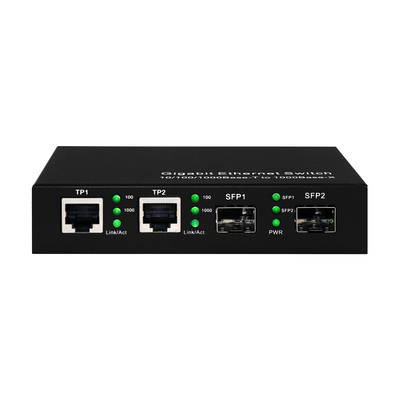
D4*4B Network Bypass TAP Industrial Fiber Bypass Switch
for Network Security Monitoring
Introduction of D4*4B Network Bypass TAP
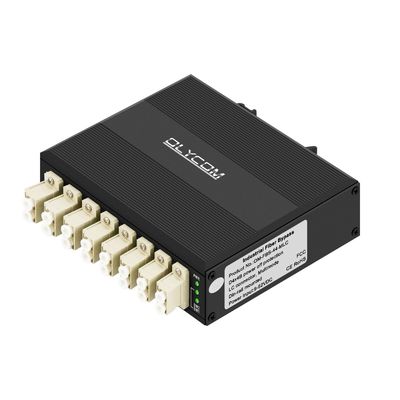
OM-FBS-44-MLC is an external fiber bypass unit for critical optical-nodes in optical network system.
- It supports 100G/40G/10G/1G and 100M fiber connections and offers LC multimode option.
- It is usually used in some major optical networks involving ring connection and multiple devices such as in railway communication systems, factory automation and important optical nodes where intended or unexpected power loss occurs.
Product Features of Industrial Fiber Bypass Switch
- Available in existing/new optical nodes
- Support Din/Wall mounting
- Industrial removable green terminal block
- Operating temperature: -20℃ ~70℃
- Robust IP40 level housing
- Bypass switching time ≤10ms
- Low insertion loss, low channel crosstalk
- DC12V~DC52V redundant power input
Specification
| Product Name |
Industrial Fiber Bypass Switch |
| Power Interface |
Standard industrial terminal block. |
| Polarity Protection |
Support |
| Optical Fiber Interface |
LC |
| Wavelength Range |
850±40/1300±40nm; 1260~1650nm |
| Test Wavelength |
850/1300nm; 1310/1550nm |
| Insert Loss |
Typ:0.6 dB Max:1.0 dB ; Typ:0.6dB Max:1.0 dB |
| Return Loss |
MM≥30 dB SM≥50 dB |
| Channel Crosstalk |
MM≥35 dB SM≥55 dB |
| Polarization Loss |
≤0.05 dB |
| Wavelength Loss |
≤0.05 dB |
| Temperature Loss |
≤0.05 dB |
| Repeatability |
≤0.05 dB |
| Operating voltage |
DC9V-52V |
| Service life |
≥100000000 times |
| Switching time |
≤10 ms |
| Transmission optical power |
≤500 mw |
Application diagram of fiber bypass switch

- Easy power control for networking system
- System Monitoring
- Smart protection of optical paths
What is Fiber bypass switch?
Bypass unit or module is usually used to protect the network system(bypassing the device it connects) when power is suddenly off.
In a linear network system(like below diagram), the transmission is fine if the data/SFP/power is normal.
What if any power supply is off (like power surge, striking, man-made damage...)
The whole network system will fail.
Another situation is, power overhaul/maintenance is required for switch 2(the middle one) area, lets say for 12 hours, the whole system got to stop.
With a bypass module/switch, it is like putting in a protection mechanism in the whole system.
A bypass switch helps protect the whole system if one or many switches fail at the same time.
Packing List
- 1pc optical fiber bypass switch
- 1pc user manual
- 1pc warranty card
Actual Photo
FAQ
Q1: How does the fiber bypass improve network reliability?
A: The fiber bypass automatically redirects optical signals when a connected device loses power or fails, helping maintain network continuity and reducing service interruptions.
Q2: Why is low insertion loss important in optical networks?
A: Low insertion loss minimizes signal attenuation during transmission, helping maintain stable communication quality in long-distance or high-density fiber deployments.
Q3: Is this fiber bypass suitable for telecom and data center applications?
A: Yes. The module supports multiple optical wavelengths and provides stable low-loss transmission, making it suitable for telecom infrastructure, data centers, and enterprise fiber networks.
Q4: What problem does a fiber bypass solve during equipment maintenance?
A: During maintenance or unexpected device failure, the bypass can keep the optical link active by bypassing the disconnected equipment, helping reduce network downtime and service disruption.
Q5: Can this module operate in industrial environments?
A: Yes. With an operating temperature range of -20°C to 70°C, the module is designed for stable performance in industrial and outdoor deployment environments.
Q6: Is the module compatible with different fiber systems?
A: Yes. It supports common telecom wavelengths including 850nm, 1300nm, 1310nm, and 1550nm, making integration easier across different optical network architectures.


 Your message must be between 20-3,000 characters!